Last updated November 18, 2026
Free written scope consultation - allowances, timeline, and change-order rules on paper before a single trade is scheduled
The Complete Driveway & Pavers Guide for Grand Prairie Homeowners
Most driveway failures in Grand Prairie don’t start with the pavers. They start 8 inches below them. Homeowners spend weeks comparing colors and laying out patterns, then hand the base prep to whoever quotes the lowest number. Two summers later the surface is wavy, joints are spreading, and the paver they picked isn’t the problem at all. The soil underneath is. Grand Prairie sits on some of the most expansive clay in Texas, and that clay moves seasonally no matter how premium the surface looks in a showroom. This guide works backward from that reality: which paver systems hold up here, what base depth actually works, how drainage and edge restraint have to be built for this ground, and what to ask before you sign anything.
Quick Answer
A driveway that lasts in Grand Prairie needs a compacted base of at least 6 to 8 inches of crushed aggregate over properly graded clay, a paver rated for vehicular load (not a patio paver), and edge restraint that’s anchored, not glued. Concrete pavers from Belgard, Unilock, Techo-Bloc, Tremron, or Cambridge Pavers handle Texas heat cycling better than most poured surfaces because individual units flex and can be lifted for repair. Typical installed cost runs from about $12 to $22 per square foot depending on material and site conditions, and the written estimate sets the final price.
Styles & brands we work with
- Kitchen remodeling
- Bathroom remodeling
- Home additions & ADU
- Roofing
- Windows & doors
- Driveway & pavers
- Fence
Table of Contents
- Why Grand Prairie Clay Soil Changes Everything
- How Deep Does Paver Base Need to Be in Grand Prairie?
- Concrete Pavers vs. Natural Stone vs. Permeable Pavers in Texas Heat
- How to Read a Paver Spec Sheet
- Drainage, Slope, and Edge Restraint in Grand Prairie
- What a Full-Scope Contractor Handles That a Paving-Only Sub Won’t
- What Driveway Pavers Cost in Grand Prairie
- Common Mistakes to Avoid
Why Grand Prairie Clay Soil Changes Everything
Grand Prairie sits on the Blackland Prairie, a band of dark, heavy clay that runs through this part of North Texas. That clay is rich for farming and difficult for paving. When it’s wet it swells, and when it dries out in a 100°F August it shrinks back. That seasonal movement is the single biggest reason driveways fail here, and it’s the reason a base spec copied from a sandy-soil suburb won’t perform the same way on your lot.
Sandy soils drain fast and stay put. Clay holds water, expands, and pushes upward against anything sitting on it. A driveway built on a thin base over unamended clay will telegraph that movement straight to the surface. You’ll see it first as low spots where water pools after a rain, then as rocking pavers, then as joints that open up wider each season.
What this means in practice:
- Base depth matters more here than in sandy areas. The aggregate layer has to be thick enough to spread load and bridge the clay’s movement.
- Subgrade prep is a real step, not a formality. The clay needs to be graded, proof-rolled, and compacted before any stone goes down.
- Drainage has to move water away from the slab edge. Standing water against clay accelerates the swelling cycle.
- Geotextile fabric earns its cost here. A separation layer keeps fine clay particles from pumping up into the aggregate and ruining its drainage over time.
None of that is glamorous. All of it is what separates a driveway that’s still flat in year ten from one that’s rippled by year five. When we talk with Grand Prairie homeowners about a driveway & pavers project, the soil conversation comes before the color conversation for exactly this reason.
How Deep Does Paver Base Need to Be in Grand Prairie?
A minimum of 6 inches of compacted crushed aggregate is the working floor for a residential driveway in Grand Prairie, and 8 inches is the safer number for a standard two-car driveway that sees daily traffic. Anything less is where failures start. The number has to be measured after compaction, not before, because loose stone can lose a third of its depth once it’s properly consolidated.
Here’s how base prep actually has to go on Blackland clay, step by step:
- Excavate to full depth. That means the paver thickness, plus the bedding sand, plus the compacted base, plus a margin. Skimping on the dig is the most common shortcut, and it’s invisible once the driveway is finished.
- Grade the subgrade away from the structure. The clay underneath needs a slope so water has somewhere to go before it ever reaches the aggregate.
- Proof-roll and compact the subgrade. A heavy roller reveals soft spots. Any that show up get dug out and replaced, not paved over.
- Lay geotextile fabric. This separation layer stops clay fines from migrating up into the stone and clogging it.
- Place aggregate in lifts of 3 to 4 inches. Each lift gets compacted before the next goes down. Dumping 8 inches at once and running a plate compactor over the top doesn’t achieve the same density.
- Check grade and slope with a level and string line. Get this right before the sand goes down, because there’s no adjusting it afterward.
The order matters. Homeowners sometimes ask whether the base can be built up over existing soil that’s already “hard.” Hard isn’t the test. Stable through a wet spring and a dry August is the test. We’ve seen plenty of Grand Prairie lots where the top foot of clay looked solid until a soaking rain turned it into a sponge. If your driveway is at a phase of construction where you’re also planning property improvements, the same grading logic carries over to fence installation, where footing depth and drainage matter just as much.
Concrete Pavers vs. Natural Stone vs. Permeable Pavers in Texas Heat
All three families of material can work in Grand Prairie, but they fail differently and they cost differently. The comparison that matters is how each handles a climate that swings from roughly 100°F summers to the freeze events North Texas does get, on top of soil that won’t stop moving.
Concrete Pavers
Concrete pavers from Belgard, Unilock, Techo-Bloc, Tremron, or Cambridge Pavers are the workhorse choice for most Grand Prairie driveways. Individual units flex slightly against the base, so minor soil movement cracks a joint rather than a slab. If one gets damaged, you lift it and replace it. Color runs deep through the unit rather than sitting on top, so heat and sun fade is slower than with a painted or stamped surface.
Interlocking shapes add a mechanical connection between units. That matters more on clay than on stable soil because it spreads load across a wider area.
Natural Stone
Stone pavers with a low water absorption rate, like granite or certain limestone, hold up well to sun and temperature swings and they age without looking dated. The tradeoff is cost and consistency. Natural stone varies in thickness and absorption from piece to piece, so installation takes more care and the bedding layer has to be set more precisely. It’s a premium choice, and it earns it on the high end.
Permeable Pavers
Permeable systems let water drain through the joints and into an open-graded stone reservoir below. On clay soil, that design has a catch: water that can’t soak into the clay has to go somewhere, so the reservoir needs an engineered outlet. Done right, permeable pavers reduce runoff and take pressure off drainage. Done wrong, they hold water under the driveway and accelerate the swelling problem they were supposed to solve.
Side-by-side, here’s how the three compare for a Grand Prairie driveway:
- Heat cycling: Concrete pavers and granite handle it well. Thin, high-absorption stone and poorly sealed soft stone less so.
- Freeze events: Low water absorption wins. A paver that holds water expands when it freezes and spalls. Check absorption before you pick.
- Repairability: All three lift and reset. Concrete pavers are the easiest to match and source.
- Cost: Concrete pavers sit in the middle. Natural stone runs higher. Permeable systems add cost for the reservoir and outlet.
- Base requirements: Permeable needs open-graded stone instead of dense-graded, and that changes the depth math.
How to Read a Paver Spec Sheet
Three numbers on a manufacturer’s spec sheet tell you most of what you need to know about whether a paver belongs on a driveway or a patio. Knowing what to look for lets you ask better questions before the estimate, and it’s the fastest way to spot a patio-grade paver being quoted for a driveway job.
1. Compressive Strength (PSI)
Compressive strength is measured in pounds per square inch and it’s the load rating. A driveway paver needs a higher rating than a patio paver because it takes vehicle weight plus the point load of a tire on one unit. When you compare products from different manufacturers, keep them in the same units and confirm the rating is for the product being quoted, not the brand’s flagship line. If a spec sheet doesn’t list compressive strength, that’s worth a question.
2. Water Absorption Rate
Absorption rate tells you how much water the paver takes in as a percentage of its weight. Lower is better in a climate that cycles from wet springs to hot, dry summers. A paver that absorbs water will swell and contract with the weather on top of whatever the clay is doing, and repeated freeze events can crack or spall a high-absorption unit. Ask for the percentage and compare it across the products you’re quoted.
3. Chamfer Style and Edge Detail
The chamfer is the beveled edge on the top of the paver. It looks like a small detail and it isn’t. A wider chamfer creates a wider joint channel that takes bedding sand more readily, which helps lock the units together. A tight chamfer gives a cleaner look on a patio but can chip at the edges under vehicle traffic and turning wheels. For a driveway in Grand Prairie, a moderate chamfer tends to work better than a knife-edge.
Ask for the actual spec sheet on every product in the quote. Any manufacturer doing this at scale will provide PSI, absorption, and dimensional tolerance. If a contractor can’t produce them, that tells you something about the depth of the quote.
Drainage, Slope, and Edge Restraint in Grand Prairie
Grand Prairie’s ground runs from flat to gently rolling, and both extremes create drainage problems that a paving-only installer often leaves for the homeowner to discover. Flat lots pond water. Sloping lots send it toward the house, the garage, or the neighbor’s property. Getting drainage right is a design question, not a construction detail you add at the end.
The working rule is a slope of roughly 1 to 2 percent away from the structure, adjusted to the site. On a flat lot, that may mean a swale, a channel drain, or a tie-in to existing storm drainage instead of relying on grade alone. On a slope, water coming down the hill needs an intercept so it doesn’t sheet across the new driveway and undermine the edge.
Edge restraint is the other half of the picture. It’s the border that holds the pavers from spreading outward under load. On clay soil that’s moving, restraint has to be anchored into the base, not just set alongside the pavers and glued. A driveway that looks perfect on day one and fans out at the edges after a couple of winters almost always has an edge restraint problem.
What to check in the plan:
- Drainage direction marked on a drawing before work starts, not decided on site.
- Low-point handling. Where does water go when it hits the lowest spot on a flat Grand Prairie lot?
- Tie-ins to existing concrete. The transition between new paver and old slab is where water seeps in and where settling shows first.
- Edge restraint anchored to the base, spiked or pinned per the manufacturer’s requirement for that system.
- Gutter and downspout discharge routed away from the driveway edge so you’re not concentrating water where the base meets the clay.
What a Full-Scope Contractor Handles That a Paving-Only Sub Won’t
A paving-only sub sets pavers. That’s the job, and on a simple patio it’s enough. A driveway is a different scope, and the pieces that fail are usually the pieces nobody was hired to touch. Grading, drainage tie-ins, and the transition to existing concrete sit at the boundary between trades, and on a paving-only contract they fall into a gap that shows up later as a settled edge or a water problem.
What we handle on a Grand Prairie driveway that a paving sub typically hands back to the homeowner:
- Grading and drainage design. Where water goes and how the lot is shaped to send it there, coordinated with the driveway layout.
- Drainage tie-ins. Connecting new surface drainage to existing systems rather than leaving runoff to pool at the property line.
- Transitions to existing concrete. The driveway apron, the garage threshold, and the sidewalk connection are where water gets in and where settlement shows first.
- Adjacent hardscape and vertical work. Steps, retaining walls, and walkway connections that have to match the driveway in material and grade.
- Sequencing with other exterior work. If you’re adding a driveway and planning an addition on the same property, the grading for one affects the other. Keeping it under one contract avoids two contractors pointing at each other when something settles.
This is also where our broader capability matters. We install hardscape from Belgard, Unilock, Techo-Bloc, Tremron, and Cambridge Pavers, and because we also handle additions, we can plan a driveway around where a future structure will sit rather than paving over the logical spot for a footing. If you’re thinking about adding livable square footage, the same grading survey informs a home additions & ADU project, including prefab options from Abodu, Dvele, and Boxabl. Site work that’s coordinated from the start is cheaper than site work that gets redone.
What Driveway Pavers Cost in Grand Prairie
Driveway pavers in Grand Prairie typically run from about $12 to $22 per square foot installed, depending on material, base depth, and how much drainage work the site needs. The written estimate sets the final price, and that estimate should break out the line items below so you can see where the money is going.
| Line item | Typical range |
|---|---|
| Concrete pavers, installed | $12 to $18 per sq ft |
| Natural stone pavers, installed | $18 to $22+ per sq ft |
| Permeable paver system, installed | $15 to $22 per sq ft |
| Base prep and compaction (deep clay spec) | included in the ranges above |
| Edge restraint, anchored | included in the ranges above |
| Drainage additions (channel drain, swale, tie-in) | quoted per site |
A few things move the number. A site that needs extra excavation to reach a stable subgrade costs more. A flat lot that needs a channel drain to solve ponding costs more than a lot with natural fall away from the house. And a driveway that has to be cut out and replaced rather than built new carries the same numbers plus removal.
The best comparison tool you have is a line-item written estimate. A one-line quote for “driveway pavers” tells you nothing about base depth, compaction method, edge restraint, or drainage. Ask for the spec sheet on the product and the base depth in the quote. Our technicians have up to 10 years of experience with these systems, and the estimates we provide are free and itemized. Call (844) 771-4071 to set one up. We answer 24/7. Fast dispatch from 7am to 7pm, Sunday through Friday.
Common Mistakes to Avoid
- Choosing the paver before the base spec. The prettiest paver in the showroom will ripple on a 4-inch base over Grand Prairie clay. Decide the base depth first, then the surface.
- Quoting a patio-grade paver for a driveway. A unit rated for foot traffic won’t survive tire point loads plus clay movement. Check the compressive strength rating, not just the color.
- Skipping geotextile fabric to save a little. On Blackland clay, fines migrate up into the aggregate and clog it. The fabric is cheap insurance against a base that stops draining.
- Glue-only edge restraint. On moving clay, restraint has to be anchored into the base. Glued borders are where fanned edges start.
- Paving a flat lot without a low-point plan. Grand Prairie has plenty of flat-to-rolling topography. If nobody’s drawn where the water goes, it’ll find the worst possible path.
- Leaving the transition to existing concrete to chance. The apron and the garage threshold are where seepage and settling show first. Plan the transition detail before the pour, not after.
- Hiring a paving-only sub for a site that needs grading and drainage work. The pavers will be fine. The gap between the pavers and the house won’t be, and that gap is nobody’s line item.
See the difference
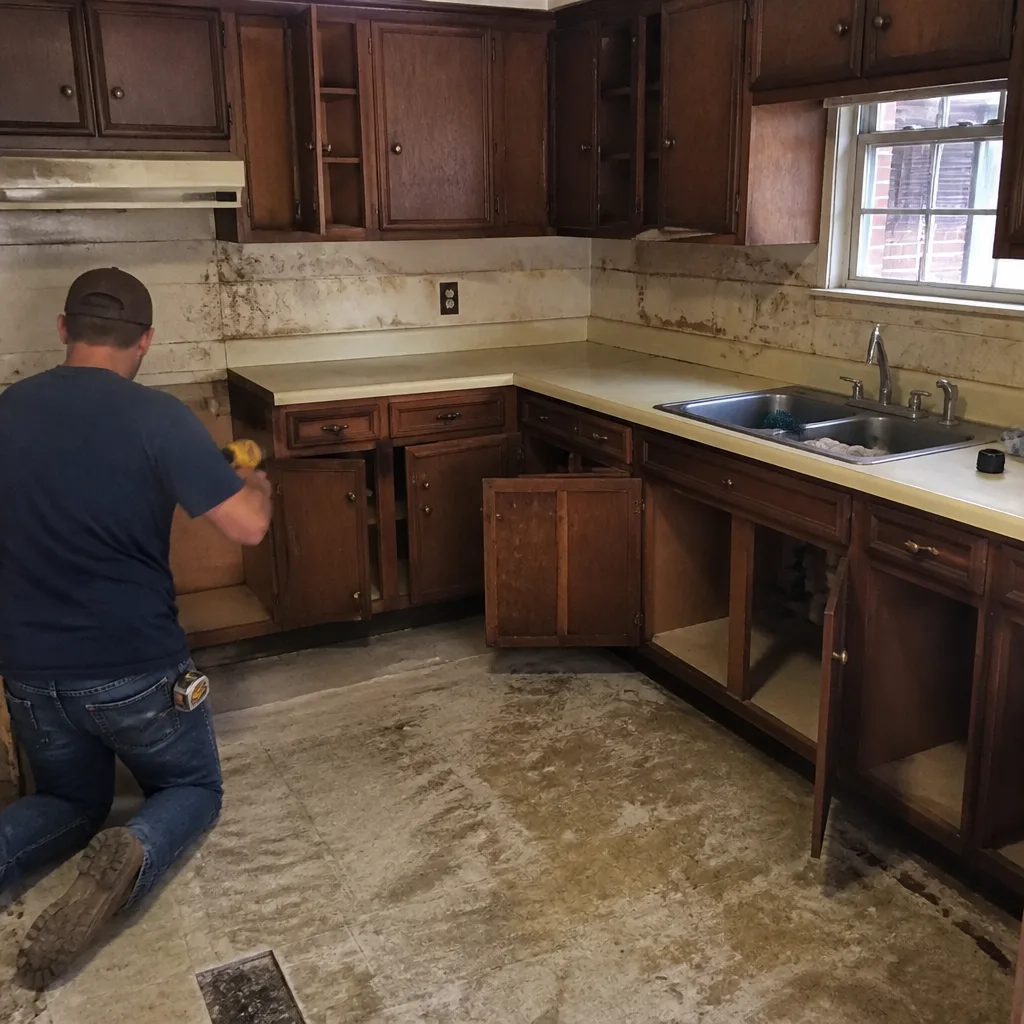 Before
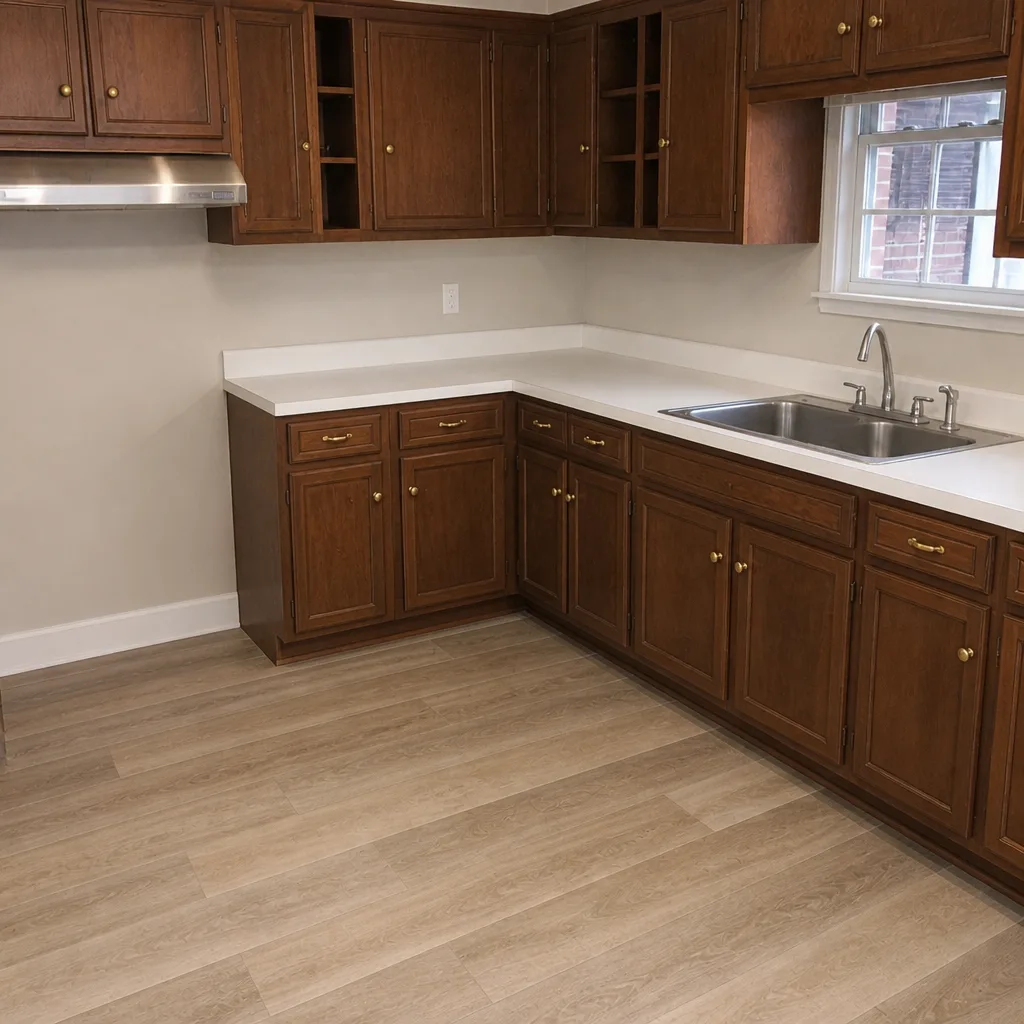 After
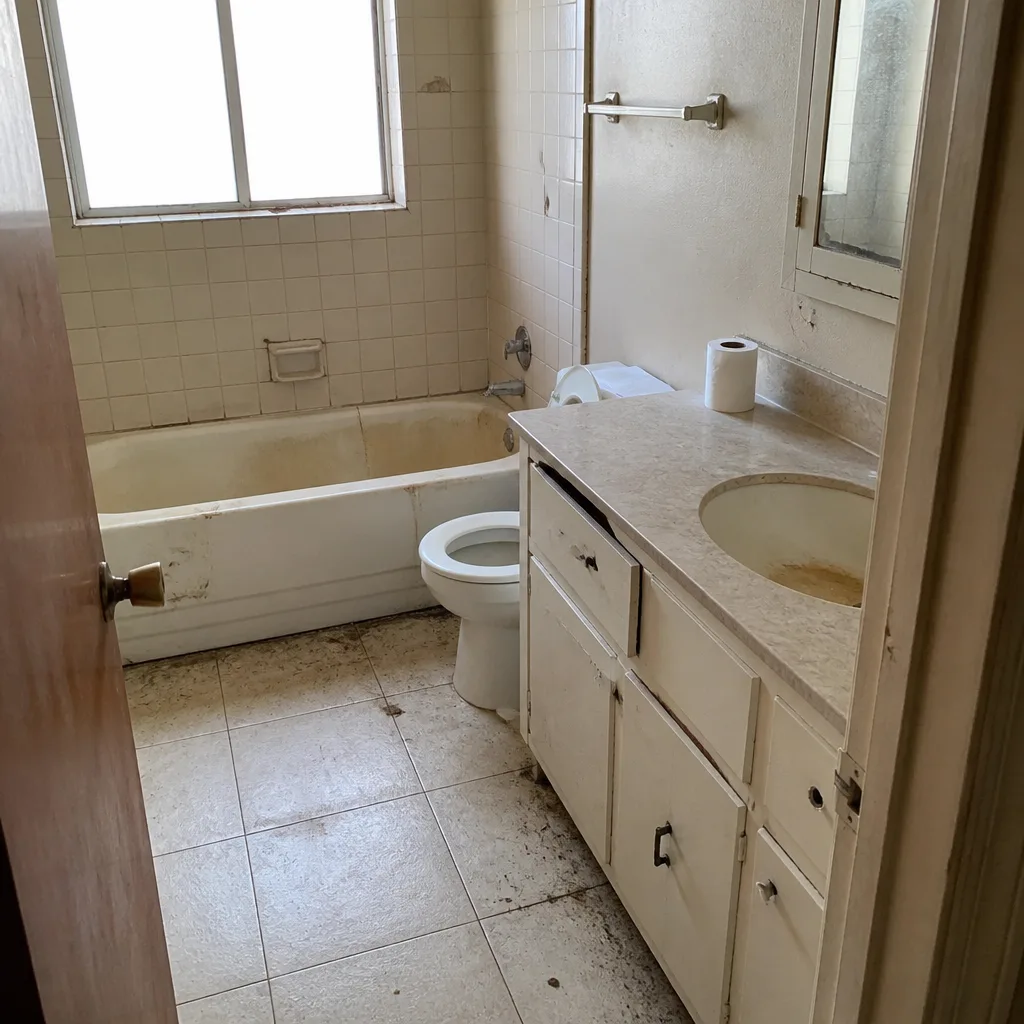 Before
 After
 Before
 After
When to Call a Professional
Some driveway issues are cosmetic and some are structural, and the difference matters. Call a professional if your driveway has low spots that pond water for days after a rain, if pavers are rocking underfoot or the joints are opening wider each season, if the edges are fanning out, or if you’re seeing cracks in the transition where the driveway meets the garage or sidewalk. Those are signs the base or the drainage is failing, and repaving over a failed base simply hides the problem for a season or two. Call before the surface fails completely if you’re planning a driveway around a future addition, because the grading work overlaps and sequencing it correctly saves money. Construction Grand Prairie offers free estimates in Grand Prairie. Call (844) 771-4071. We answer 24/7. Fast dispatch from 7am to 7pm, Sunday through Friday.
Frequently Asked Questions
Paver driveways in Grand Prairie typically run from about $12 to $22 per square foot installed, depending on material, base depth, and drainage requirements. Concrete pavers sit in the lower to middle part of that range, natural stone runs higher, and permeable systems add cost for the reservoir and outlet. Call (844) 771-4071 for an exact quote – estimates are free.
A minimum of 6 inches of compacted crushed aggregate is the working floor, and 8 inches is the safer spec for a two-car driveway on Blackland clay. The depth has to be measured after compaction, and the base should go down in lifts of 3 to 4 inches with compaction between each one. Anything less is where the wavy surfaces start.
Concrete pavers don’t crack the way a poured slab does, because individual units flex slightly and can be lifted and reset. What fails on clay is the base, not the paver. If the base is thin or poorly compacted, the surface will ripple and rock even with premium pavers. Get the base right and the surface holds up.
Permeable pavers can work here, but they need an engineered outlet because water can’t soak into clay the way it does into sand. Without an outlet, the reservoir under the driveway holds water against the clay and makes swelling worse. If a permeable system is on your list, the drainage design matters more than the paver itself.
The written estimate sets the final price on what’s quoted. What can change it is a buried surprise: soft subgrade that has to be dug out, or unexpected drainage work the site needs. Those get discussed and documented before the work moves forward, not discovered at the end. Ask for a line-item estimate so you can see what’s included. Call (844) 771-4071 – estimates are free.
A typical residential driveway in Grand Prairie takes several days, with the base prep and compaction accounting for a large share of the schedule. Drainage additions, extra excavation, and larger square footage extend it. The estimate should lay out the sequence so you know what to expect from excavation through final sanding and cleanup. Call (844) 771-4071 to talk through your project.
The Bottom Line
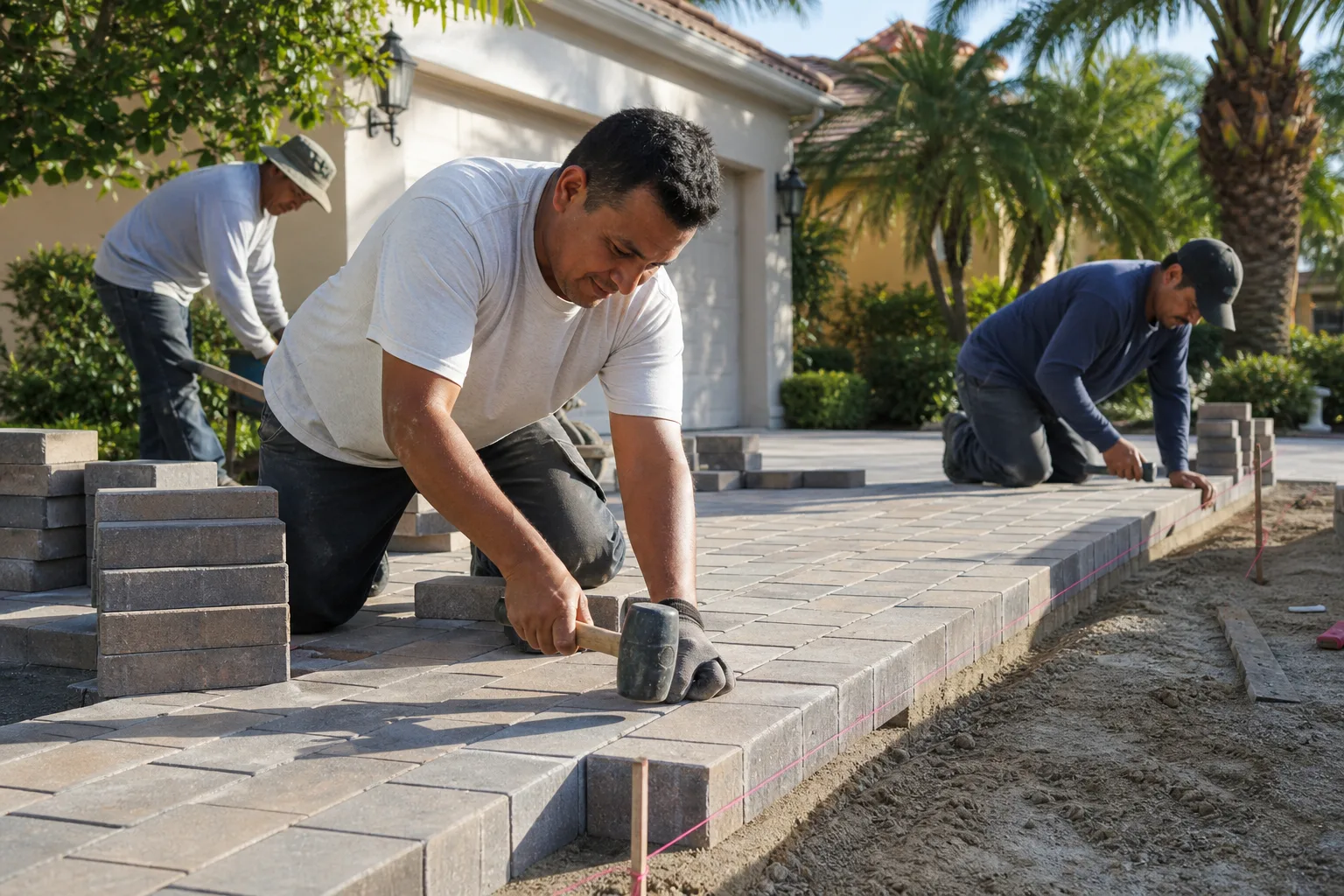
The paver you choose matters, but the base under it matters more. Grand Prairie’s Blackland clay moves through wet seasons and hot summers, and that movement will fail a thin base no matter how good the surface looks. Build to a minimum of 6 to 8 inches of compacted aggregate, use geotextile fabric, anchor your edge restraint, and design the drainage before anyone digs. Pick a paver rated for vehicle load from a brand with a documented spec sheet, whether that’s Belgard, Unilock, or Techo-Bloc. And keep grading, drainage tie-ins, and transitions with the same contractor who sets the pavers, so nothing falls between trades. For a complete look at how these exterior pieces fit together, start with Construction Grand Prairie.
If you want a line-item estimate on a driveway, a patio, or a full exterior plan, call Construction Grand Prairie at (844) 771-4071 for a free estimate. We answer 24/7. Fast dispatch from 7am to 7pm, Sunday through Friday.
Written by the team at Construction Grand Prairie.